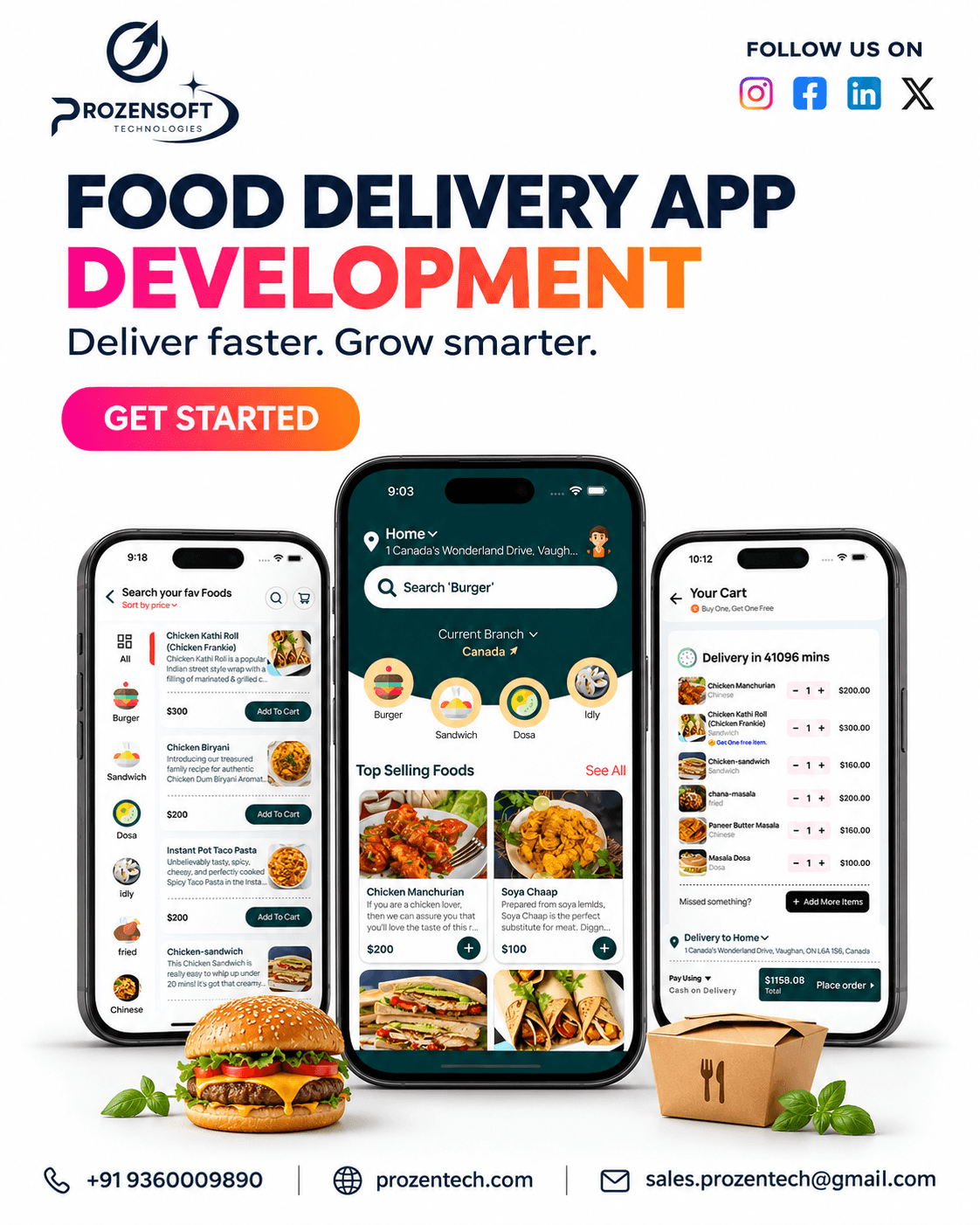
The Digital Transformation of Food Delivery
The food delivery industry has transformed the way customers discover restaurants, order meals, and enjoy convenient dining experiences. With increasing smartphone usage and growing demand for doorstep delivery, digital ordering platforms have become an important part of the restaurant business.
Traditional restaurants are no longer limited to walk-in customers or telephone orders. A dedicated mobile application enables businesses to showcase menus, accept online orders, process payments, and communicate with customers through a centralized platform.
Food Delivery App Development allows restaurant owners, cloud kitchens, and entrepreneurs to establish their own branded digital platforms instead of relying entirely on third-party marketplaces.
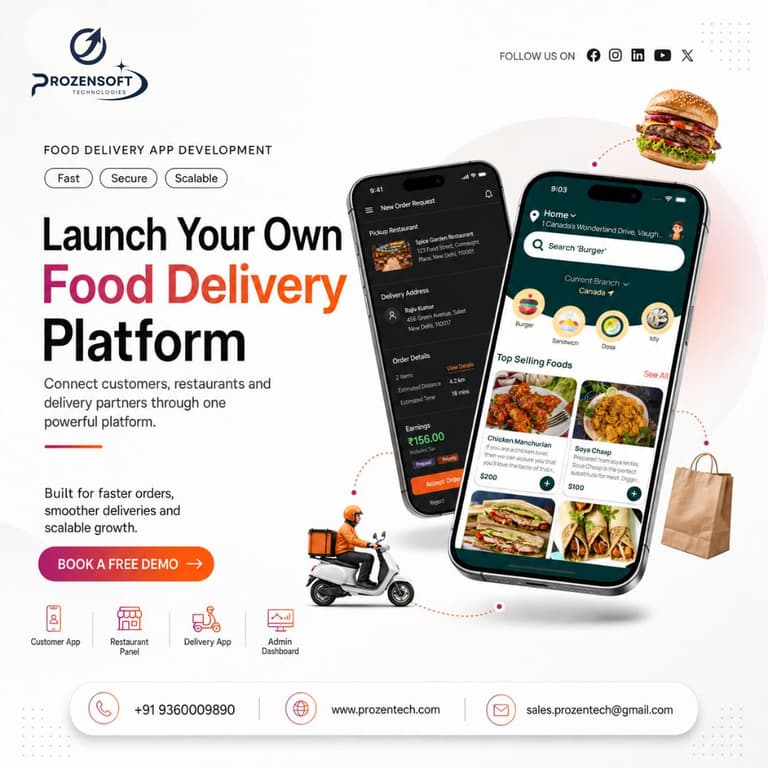
Modern food delivery applications can connect customers, restaurants, delivery partners, and administrators within a single ecosystem. This integrated approach helps simplify daily operations and improve the overall ordering experience.
Businesses investing in digital ordering technology can create new opportunities for customer engagement, operational efficiency, and long-term expansion.
Food Delivery Business Models and Revenue Opportunities
Choosing the right business model is an important step before launching a food delivery application. Different business structures require different platform features and operational workflows.
Single-Restaurant Delivery Model
A restaurant develops its own branded ordering application to serve customers directly. This model can support customer relationships, personalized promotions, and direct order management.
Multi-Restaurant Marketplace
A marketplace connects multiple restaurants with customers through one platform. The operator can manage restaurant onboarding, commissions, delivery operations, and customer support.
Cloud Kitchen Delivery Model
Cloud kitchens operate primarily through online ordering and delivery. A dedicated application can help manage digital orders, menus, customer communication, and fulfillment.
Subscription-Based Model
Platforms may introduce optional membership programs offering defined benefits, such as eligible delivery discounts or promotional offers.
Commission-Based Revenue
Marketplace operators may generate revenue by charging participating restaurants a percentage or fixed fee on qualifying orders.
Delivery Charges and Promotional Services
Additional revenue opportunities may include delivery fees and clearly disclosed promotional placements.
The most suitable model depends on the target market, operating costs, restaurant partnerships, delivery capacity, and customer demand.
Improving Restaurant Operations and Delivery Efficiency
Restaurants can receive orders through a centralized dashboard, reducing dependence on telephone-based ordering.
Order Status Management
Structured workflows allow restaurants to update orders through stages such as accepted, preparing, ready for pickup, and completed.
Delivery Partner Assignment
Orders can be assigned manually or through configured assignment rules based on business requirements.
Location and Delivery Tracking
Mapping integrations can help delivery partners navigate to pickup and drop-off locations while providing relevant status information to customers.
Menu and Availability Management
Restaurants can update prices, menu items, and product availability without relying on manual customer communication.
Business Reporting
Administrators can monitor orders, sales activity, delivery performance, and operational trends.
By connecting restaurant management with delivery coordination, businesses can reduce unnecessary manual work and improve service consistency.
Reliable operations remain essential for maintaining customer satisfaction and supporting business growth.
Technology, Scalability, and Customer Experience
The long-term success of a food delivery application depends on its usability, reliability, security, and ability to support business expansion.
Mobile-First User Experience
Customers should be able to discover restaurants, customize orders, and complete checkout through a simple, intuitive interface.
Scalable Backend Architecture
A well-planned backend can support increasing users, restaurants, orders, and delivery operations as the business grows.
Secure Payment Processing
Integrating established payment providers helps businesses support digital transactions while following applicable security requirements.
Cloud Infrastructure
Suitable hosting and infrastructure services can improve application availability, deployment flexibility, and operational monitoring.
Push Notifications
Relevant notifications help customers stay informed about order confirmations, preparation, dispatch, and delivery.
Analytics and Reporting
Business dashboards can provide insights into order volumes, restaurant performance, customer activity, and delivery operations.
Customization and Integrations
Businesses may require integrations with point-of-sale systems, third-party payment providers, mapping services, or existing restaurant management software.
Investing in a flexible technology foundation allows businesses to improve functionality as customer expectations and operational requirements change.
Why Choose Prozensoft Technologies for Food Delivery App Development?
Launching a food delivery platform requires more than an attractive mobile interface. Businesses need reliable ordering workflows, restaurant management tools, payment integration, delivery coordination, and scalable administration capabilities.
At Prozensoft Technologies, we develop customizable mobile applications and digital platforms for restaurants, cloud kitchens, food delivery startups, and entrepreneurs.
Our Food Delivery App Development solutions can be tailored to different operating models, including single-restaurant applications and multi-restaurant marketplaces.
Our Development Capabilities Include:
-
Customer Android and iOS applications
-
Restaurant and menu management
-
Delivery partner applications
-
Online ordering and checkout
-
Payment gateway integration
-
Order tracking and notifications
-
Promotional offers and discount management
-
Multi-restaurant marketplace functionality
-
Centralized administrative dashboards
-
Custom features and third-party integrations
We focus on understanding business requirements, creating user-friendly interfaces, and developing technology that supports efficient day-to-day operations.
Whether you're launching a new food delivery startup or expanding an existing restaurant business, a well-designed digital platform can help establish your brand and improve customer convenience.
Build Your Brand. Simplify Food Ordering. Deliver Better Digital Experiences.
Prozensoft Technologies helps businesses transform their food delivery ideas into practical, customizable software solutions.
Frequently Asked Questions (FAQ)
1. What is a food delivery application?
A food delivery app Development is a digital platform that allows customers to browse restaurant menus, place food orders, make payments, and receive delivery updates through a mobile device.
2. How much does it cost to develop a food delivery app?
Development costs depend on the number of applications, required features, platform complexity, UI/UX design, integrations, and customization requirements.
3. Can I launch my own food delivery business?
Yes. Entrepreneurs can launch branded food delivery platforms using a single-restaurant, multi-restaurant marketplace, or cloud kitchen business model.
4. Does a food delivery platform need a delivery partner app?
A dedicated delivery partner application is useful when businesses manage their own delivery operations. Requirements depend on the fulfillment model.
5. Can multiple restaurants operate through one application?
Yes. A multi-restaurant marketplace can allow participating restaurants to manage their menus, orders, and relevant store operations through separate accounts.
6. Can food delivery applications support online payments?
Yes. Applications can integrate suitable payment gateways based on regional availability, business requirements, and payment provider support.
7. Can food delivery software be customized?
Yes. Features such as restaurant management, delivery assignment, commission structures, payment methods, and promotional tools can be customized according to business requirements.
8. How can I start a food delivery app project with Prozensoft Technologies?
Start by defining your business model, target market, delivery operations, and required features. Prozensoft Technologies can help evaluate your requirements and plan a suitable development solution.
Essential Features of a Modern Food Delivery Application
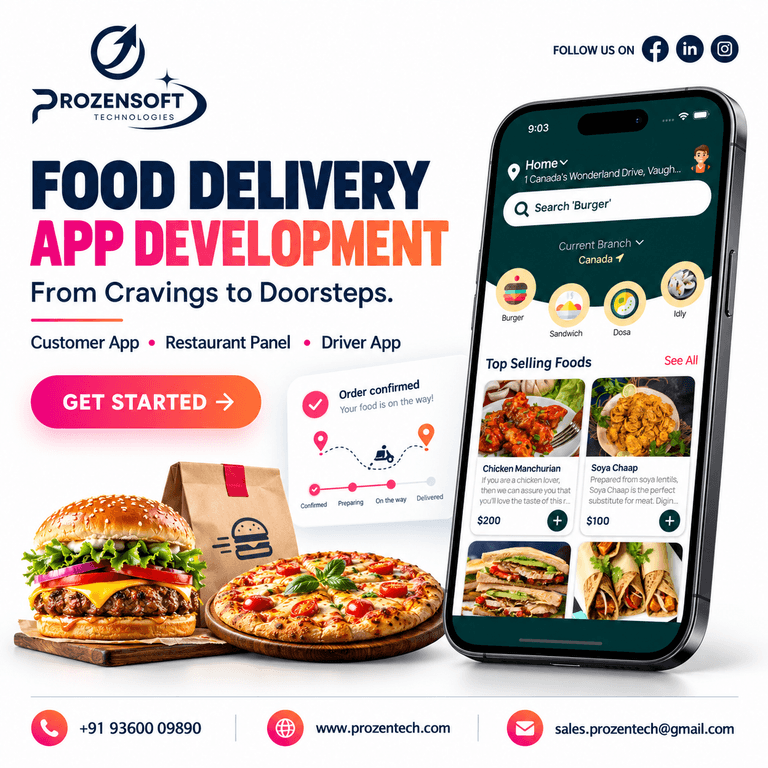
A successful food delivery App platform requires features that make ordering convenient for customers while helping restaurants and delivery partners manage their responsibilities efficiently.
Customer Mobile Application
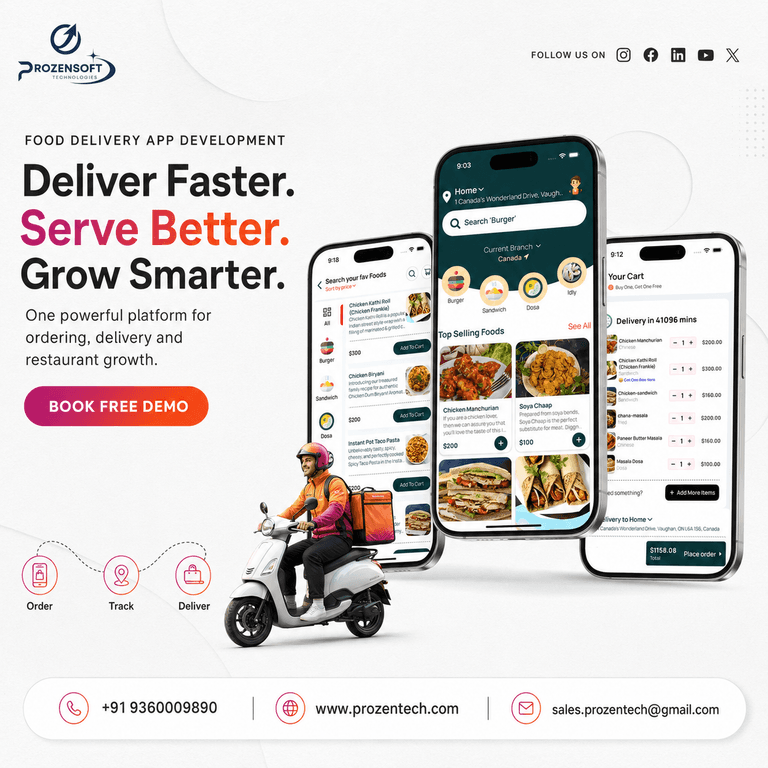
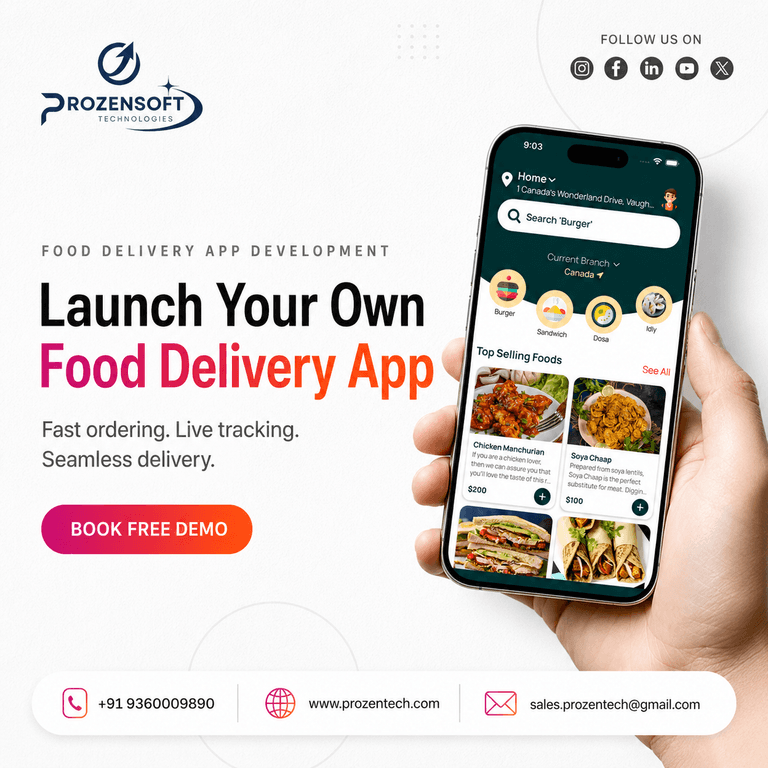
The customer application should offer restaurant discovery, menu browsing, product customization, cart management, secure checkout, order history, and delivery status updates.
Restaurant Management Dashboard
Restaurant owners need tools to manage menus, pricing, product availability, incoming orders, preparation times, and promotional campaigns.
Delivery Partner Application
A dedicated delivery application can provide order assignments, pickup information, navigation integration, delivery status updates, and delivery confirmation.
Centralized Admin Panel
Administrators can oversee customers, restaurants, delivery partners, transactions, promotional offers, and platform operations.
Payment Gateway Integration
Supporting suitable digital payment methods helps customers complete purchases conveniently and securely.
Real-Time Notifications
Order confirmations, restaurant acceptance updates, and delivery notifications improve communication between all participants.
Together, these capabilities create a connected platform that supports the complete food ordering and delivery journey.